The Momentum “BASES” Research Group concluded a productive year
In the second year of the project, between 1 December 2023 and 30 November 2024, data entry work progressed intensively on the thematic databases of the complex bioarchaeological data of Bronze Age burials in Hungary (2500–1500/1400 BC), the Bronze Age radiocarbon dating data from Hungary (2500–1500/1400 BC), the microregional settlement networks of the Hungarian Bronze Age (2500–1500/1400 BC), and the archaeometallurgical data of Bronze Age metal finds from Hungary (2500–1500/1400 BC).
In addition, 23 scientific and popular science publications in Hungarian and foreign languages by members of the research group were published during this period (see below), and several further manuscripts are currently in press. We delivered a total of 30 presentations at twelve national and five international events, addressing both professional audiences and the general public. We presented new research results on the period in question in the Western Transdanubian region, among others, at the Night of Museums, at the Rómer Flóris Museum of Art and History in Győr and in Sopron, at the 2025 annual travelling conference of the Hungarian Society of Archaeology and Art History, and at an international archaeometric conference held in Budapest. We also contributed to the training of archaeology students through lectures and a course in materials studies at the Institute of Archaeological Sciences, Faculty of Humanities, Eötvös Loránd University.
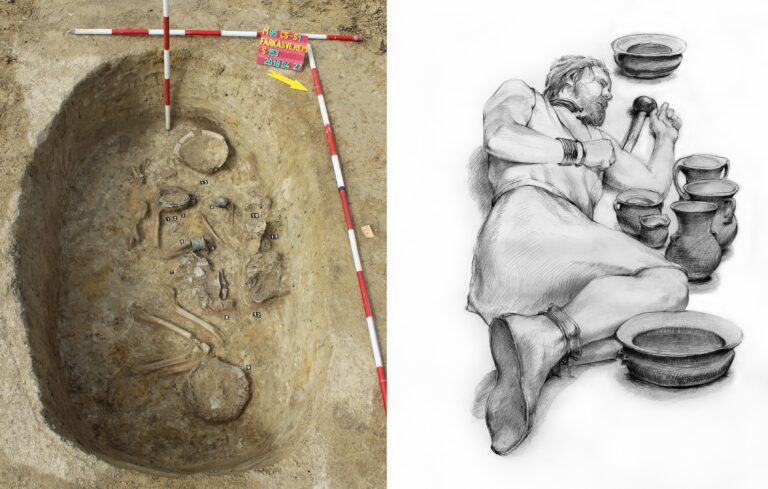
Bronze ornaments and a sceptre indicating high social status from Grave 153 at Nagycenk–Farkasverem (photograph and drawing: Rómer Flóris Museum of Art and History; Melis et al. 2025)
We participated in the organization of a highly successful international conference focusing on the archaeological and historical research of children. The conference, entitled Child Space 2025 — Narratives and New Perspectives on the Bioarchaeology of Children and Their Biosocial Complexity / Gyerekterek 2025 — Új narratívák és nézőpontok a gyerekek biorégészeti és bioszociális kutatásában, was held in Budapest between 4 and 6 June 2025. Within the framework of the event, 30 papers were presented and 15 posters introduced research on childhood from prehistory to the eighteenth century. The presentations, offering new perspectives through the combined tools of the historical and biological sciences, as well as the abstracts of the posters, were published in an abstract volume (Mateovics-László, Kulcsár 2025). Recorded presentations are available on the ELTE HTK YouTube channel.
From our own research, we presented the results of peptide analyses conducted on individuals excavated from the Nagycenk cemetery in collaboration with the University of Vienna, as well as dietary studies carried out in cooperation with researchers of HUN-REN ATOMKI. In addition, we introduced interdisciplinary research connected to a child burial from the Jobbágyi cemetery, and the investigation of a Middle Bronze Age mass grave uncovered in the outer settlement area of Tiszafüred-Majoroshalom III.
The organization of the conference was supported by the Momentum Programme and by a grant from the NKFI Mecenatúra scheme. The conference was also accompanied by an exhibition of children’s drawings; an exhibition and a related publication were produced from the artworks (Kulcsár, Mészáros, Varga 2025).
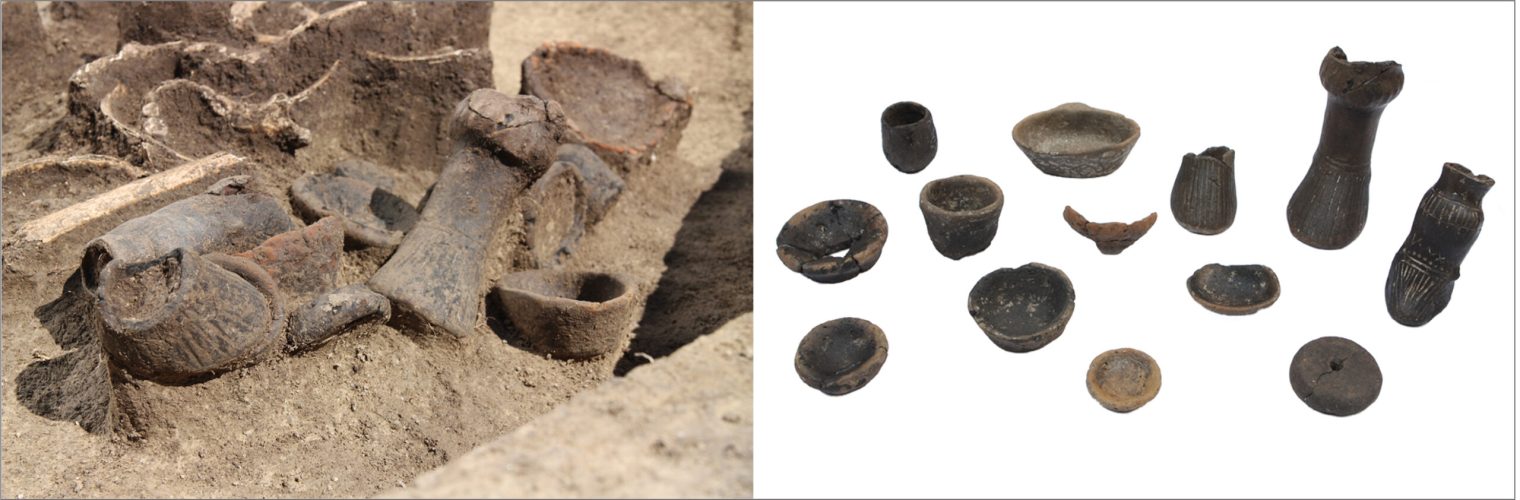
Late Bronze Age child burial and its miniature ceramic grave goods from the Jobbágyi–Hosszú-dűlő site (photo: Gábor Váczi, Kristóf Fülöp)
We participated with several papers in the 31st Annual Meeting of the European Association of Archaeologists (EAA), held between 2 and 6 September 2025. Due to the domestic political situation in Serbia, the conference ultimately took place in an online format. We also presented our research at the 29th International Conference on the Early and Middle Bronze Age in Central Europe, organized by Czech and Slovak colleagues and held in Stará Lesná, Slovakia.
Viktória Kiss provided an overview of the new evidence currently available on metal mining and bronze production in the region. Nóra Szabó’s presentation addressed the relationships between gold finds and settlement structure, with particular emphasis on the issue of central places. At this latter conference, we also presented data collection carried out within the framework of a Czech–Hungarian bilateral project jointly awarded with researchers of the Czech Academy of Sciences, focusing on the distribution of several artefact types.
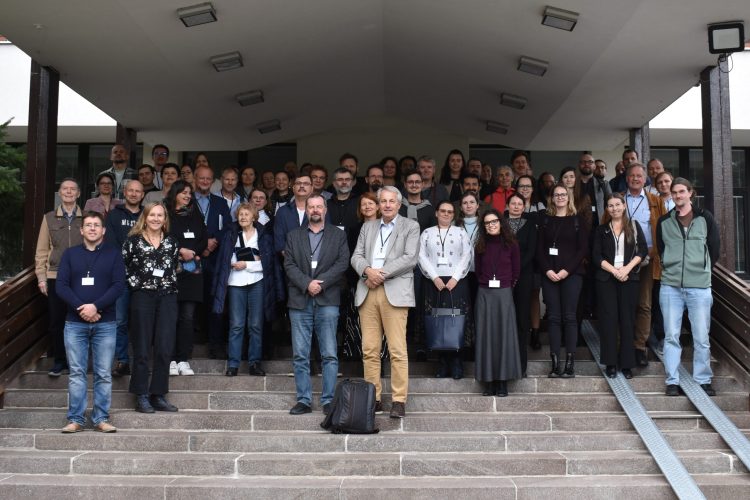
Conference in Stará Lesná, Slovakia (photo: Slovakian Academy od Sciences)
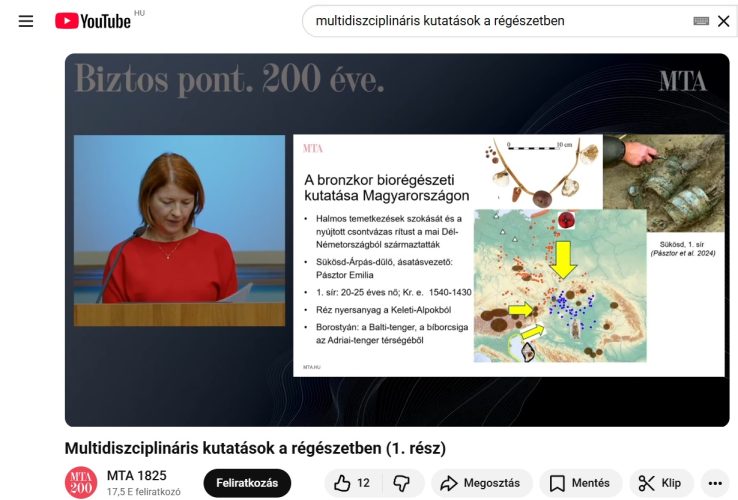
Our research group leader, Viktória Kiss, presented the results of research on mobility and trade in the Early and Middle Bronze Age within the framework of the Hungarian Academy of Sciences’ MTA200 event series, at the conference entitled Multidisciplinary Research in Archaeology. The recorded lectures are available on the YouTube channel of the Hungarian Academy of Sciences.
In Szentendre, at the Ferenczy Museum Center, within the programme Finds, Periods, People – Archaeological and Historical Open University, she delivered a popular science lecture for museum-oriented audiences. In this lecture, she presented the methods and new approaches to the study of Bronze Age lives discussed in volume 5 of the Hereditas Archaeologica Hungariae series, entitled Bronze Age Life Histories in Hungary. Bioarchaeological Case Studies from the 3rd–2nd Millennium BC.
In December 2024, Nóra Szabó defended her PhD thesis entitled Change and Transformation during the Transition Period between the Middle and Late Bronze Age along the Danube River in the Capital Region – Settlement Structure Analyses based on a Few Finds from the Vatya III – Koszider period and the early tumulus period based on a few sites in the Archaeology Doctoral Program of the ELTE BTK Doctoral School of History. In October 2025, our young colleague Kristóf Fülöp defended his PhD thesis entitled A comparative study of burial mound period burials in the Northern Great Plain through funeral rituals. The Technology of Cremation. In April 2025, Viktória Kiss submitted her DSc doctoral thesis entitled A Complex Multidisciplinary Study of Social Changes in Hungary during the First Thousand Years of the Bronze Age (2500–1500 BC).
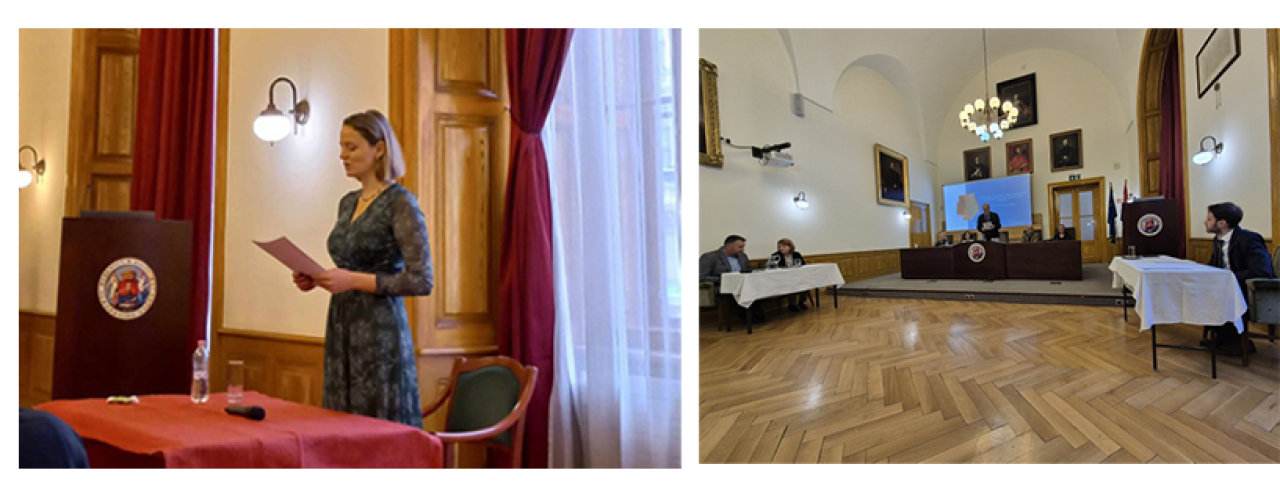
The public PhD defense of Nóra Szabó and Kristóf Fülöp in the Faculty Council Hall of the Faculty of Humanities, ELTE
The English-language version of the project website has been completed; thus, not only the aims and results of our research are now available in English, but current programmes and news are also published in bilingual form. As a result, international researchers and the wider public can continuously follow the research group’s results, lectures, fieldwork activities, and published outputs. Our news items and posts related to Bronze Age research continue to be shared several times a week on the project’s social media page with interested audiences, including our more than 1,200 followers.
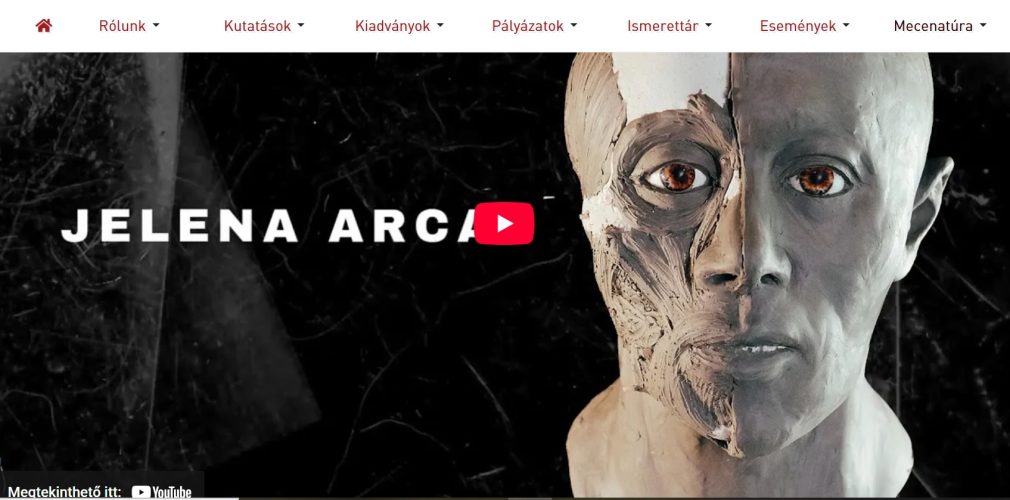
We also actively contributed to the production of a popular science short film presenting the process of creating a Bronze Age facial reconstruction connected to one of the research group’s case studies. Following the screening of the Katt(anj) a tudományra films, our film entitled The Faces of Jelena received considerable attention. This is reflected in the fact that within a few weeks the ELTE HTK YouTube channel recorded nearly 64,500 views of the film.
List of publications:
Cavazzuti, C., Horváth, A., Gémes, A., Fülöp, K., Szeniczey, T., Gamarra Rubio, B., Vicze, M., Bárány, A., Pető, Á., Magyari, E., K., Darabos, G., Futó, I., Molnár, M., Lisztes-Szabó, Zs., Molnár, E., Novak, M., Gál, E. P. Fischl, K., Kulcsár, G., Szeverényi, V., Szabó, G., Mester, E., Dani, D., Palcsu, L., Kiss, V., Major, I., Hajdu, T.: Multi-isotope, dental calculus and archaeobotanical analyses reveal significant cultural changes and introduction of systematic millet consumption around 1500 BCE in Eastern-Central Europe. Scientific Reports 15 (2025) 17494. DOI: https://doi.org/10.1038/s41598-025-01113-z
Chatzikonstantinou, I., Fülöp, K., Chronaki, S., Snoeck, Ch., Kiriatzi, E., Triantaphyllou, S.: Experimental insights into different funerary burning conditions on Crete island, Greece. Journal of Archaeological Science Reports 62 p. 105067 Paper: 105067 (2025) https://doi.org/10.1016/j.jasrep.2025.105067
Dani J., Melis E.: Bronzkori sírrablók nyomában Nyugat- és Kelet-Magyarországon. Határtalan Régészet X. évfolyam 4. szám (2025) 9–13.
Darabos, G., Merkl, R. M., Raczky, P., Füzesi, A., Gyucha, A., Riebe, J. D., Parkinson, W. A., Moskal-del-Hoyo, M., Fábián, Sz., Molnár, K., Hajdrik, G., Hajdu, T., Gémes, A., Csüllög, G., Mester, E., Dani, J., Szeverényi, V., Kiss, V., Bobek, P., Saláta, D., Magyari, E. K.: Neolithic, Copper, and Bronze Age woodland composition and exploitation in the Great Hungarian Plain, East‐Central Europe. Quaternary Environments and Humans 3/3 (2025) doi.org/10.1016/j.qeh.2025.100078 100078
Fischl, K., Pusztai, T., Buzás, M., Röpke, A. K., Drunagel, E., Anvari, J., Gucsi, L., Balázs, Á., Kienlin, T. L.: Reconstructing two buildings and architectural decorations on the Bronze Age Tell of Borsodivánka-Nagyhalom (Northeastern Hungary) Acta Archaeologica Academiae Scientiarum Hungaricae 76/1 (2025) 55-81.
Fülöp K..: A halomsíros időszak észak-alföldi temetkezéseinek összehasonlító vizsgálata a temetési rituálén keresztül – A hamvasztás technológiája. PhD disszertáció, kézirat. Budapest 2024.
Gémes, A., Kiss, K., Szeniczey, T., Hajdu, T.: Children in “Mass Graves” – Anthropological Insights into Collective Burial Contexts. In: Mateovics-László, O., Kulcsár, G. (eds.): Child Space. Narratives and New Perspectives on the Bioarchaeology of Children and Their Biosocial Complexity. International Conference Budapest, Hungary 4–6 June 2025. Abstracts. Budapest 2025, 95.
Ilon, G.: New data to the Bell Beaker period from Vas County (Western Hungary). New settlements of the Bell Beaker complex and other archaeological periods on a site on the outskirts of Bucsu. Acta Archaeologica Academiae Scientiarum Hungaricae 76/1 (2025) 13–53.
Jaeger, M., Niebieszczański, J., Kołaczek, P., Hildebrandt-Radke, I., Wochal, D., Kulcsár, G., Staniuk, R.: Middle Bronze Age fortification systems’ evolution in Kakucs-Turján in the light of geoarchaeological studies. Radiocarbon. Published online 2025:1-17. doi:10.1017/RDC.2025.10147
Kiss V.: Bronze Age Life Stories from Hungary (3rd–2nd millennia BC) . Hereditas Archaeologica Hungariae 5. Budapest 2025.
Kiss V.: Társadalmi változások komplex multidiszciplináris vizsgálata a bronzkor első ezer évében Magyarországon (Kr. e. 2500-1500). Akadémia doktori értekezés. Kézirat. Budapest 2025.
Kiss V.: Archeometriai módszerek alkalmazása a bronzkor kutatásában Magyarországon / Application of archaeometric methods in the Hungarian Bronze Age archaeology. Archeometriai Műhely 21/4 (2024) 313–318.
Kiss V., Kulcsár G.: Webes adatbázisok, adatelemzés és modellezés a régészeti kutatásban. Bronzkori társadalmi-gazdasági stratégiák a Közép-Duna vidéken: Digitális adatbázis / Web Databases, Data Analysis and Modelling in Archaeological Research. Bronze Age Socio-Economic Strategies in the Central Danube region: a digital database. Magyar Régészet / Hungarian Archaeology 15/2 (2025) 1–8. https://doi.org/10.36245/mr.2025.2.1
Kulcsár G., Mészáros N., Varga Zs. (szerk./eds): Élet a múltban – a múlt gyerekszemmel című gyerekrajz kiállítás katalógusa : Budapest, 2025. június 4–szeptember 26 = Life in the past – past through children’s eyes: catalogue of the children’s drawings exhibition. ELTE Humán Tudományok Kutatóközpontja Régészeti Kutatóintézet, Archaeolingua Alapítvány, 2025. ISBN 978-615-5766-82-4 https://doi.org/10.62150/EaM.2025
Lazaridis, I., Patterson, N., Anthony, D., Vyazov L, Fournier R, Ringbauer H, Olalde I, Khokhlov AA, Kitov EP, Shishlina NI, Ailincăi SC, Agapov DS, Agapov SA, Batieva E, Bauyrzhan B, Bereczki Z, Buzhilova A, Changmai P, Chizhevsky AA, Ciobanu I, Constantinescu M, Csányi M, Dani J, Dashkovskiy PK, Évinger S, Faifert A, Flegontov PN, Frînculeasa A, Frînculeasa MN, Hajdu T, Higham T, Jarosz P, Jelínek P, Khartanovich VI, Kirginekov EN, Kiss V, Kitova A, Kiyashko AV, Koledin J, Korolev A, Kosintsev P, Kulcsár G, Kuznetsov P, Magomedov R, Malikovich MA, Melis E, Moiseyev V, Molnár E, Monge J, Negrea O, Nikolaeva NA, Novak M, Ochir-Goryaeva M, Pálfi G, Popovici S, Rykun MP, Savenkova TM, Semibratov VP, Seregin NN, Šefčáková A, Serikovna MR, Shingiray I, Shirokov VN, Simalcsik A, Sirak K, Solodovnikov KN, Tárnoki J, Tishkin AA, Trifonov V, Vasilyev S, Akbari A, Brielle ES, Callan K, Candilio F, Cheronet O, Curtis E, Flegontova O, Iliev L, Kearns A, Keating D, Lawson AM, Mah M, Micco A, Michel M, Oppenheimer J, Qiu L, Noah Workman J, Zalzala F, Szécsényi-Nagy A, Palamara PF, Mallick S, Rohland N, Pinhasi R, Reich D.:. The genetic origin of the Indo-Europeans. Nature 639, 132–142 (2025). https://doi.org/10.1038/s41586-024-08531-5
Melis E.: Radiokarbon adatok a Dunántúl középső bronzkori abszolút kronológiájához Győr-Ménfőcsanak-Széles-földek lelőhelyről / Radiocarbon data for the absolute chronology of the Middle Bronze Age in Western Hungary at the site Győr-Ménfőcsanak-Széles-földek. Archeometriai Műhely XXI/4 (2024) 339–358.
Melis E., Mrenka A., Savanyú B.: Buzogány vagy jogar? Kiemelkedő férfi temetkezés a kora bronzkorból a Fertő-tó vidékén/Mace or Sceptre? An exceptional Early Bronze Age male burial from the area of Lake Fertő. Magyar Régészet/Hungarian Archaeology 14 (2025/1) 12–24. https://doi.org/10.36245/mr.2025.1.2/https://doi.org/10.36338/ha.2025.1.2
Melis, E., Major, I., Hajdu, T., Gémes, A., Gyenesei, K., Kanz, F., Mrenka, A., Savanyú, B., Rebay-Salisbury, K., Kiss, V.: Children on the Edge: The Youngest Members in the Early and Middle Bronze Age Communities of Western Hungary. In: Mateovics-László, O., Kulcsár, G. (eds.): Child Space. Narratives and New Perspectives on the Bioarchaeology of Children and Their Biosocial Complexity. International Conference Budapest, Hungary 4–6 June 2025. Abstracts. Budapest 2025, 36.
Mateovics-László, O., Kulcsár, G. (eds): Child Space. Narratives and New Perspectives on the Bioarchaeology of Children and Their Biosocial Complexity. International Conference Budapest, Hungary 4–6 June 2025. Abstracts. HUN-REN RCH Institute of Archaeology, Archaeolingua Foundation, 2025. ISBN 978-615-5766-81-7 https://doi.org/10.62150/EaM.2025
Pásztor E., Szilágyi V., Gerber D., Gémes A., Hajdu T., Hajduné Darabos G., Heltai B., Horváth A., Illés L., Károly I., Kovács Z., Kulcsár G., Major I., Merkl M. R., Sándorné Kovács J., Sipos E., Sümegi P., Szakmány Gy., Szécsényi-Nagy A., Szoldán Zs., T. Biró K., Kiss V.: Archeometriai vizsgálatok a Sükösd-Árpás-dűlői bronzkori temetőből – Előzetes eredmények. Archeometriai Műhely 21/4 (2024) 445–482.
Romhányi, B.: County-level Assessment of Regional Differences in the Late Medieval Kingdom of Hungary. Hungarian Studies Review 52 (2025) nr. 2, 133-159.
Romhányi, B., Szende, K.: Cities, Towns and Market Towns in the Context of Regional Disparities of the Kingdom of Hungary around 1500. Mesto a Dejiny 14 (2025) 6-32.
Szabó N.: Változás és átalakulás a középső és késő bronzkor átmeneti időszakában a Duna fővárosi szakasza mentén – Településszerkezeti elemzések a Vatya III–Koszider periódus és a korai halomsíros időszak néhány lelőhelye alapján. PhD disszertáció, kézirat. Budapest 2024.
Szeniczey, T., Melis, E., Jakab, J., Bátora, J., Major, I., Molnár, M., Horváth, A., Palcsu, L., Gémes, A., Gyenesei, K., Reyes-Centeno, H., Kiss, V., Hajdu, T.: The population history of Central Europe in the Early Bronze Age (2200/2100–1600/1500 BC) – a craniometric approach. Archaeological and Anthropological Sciences 17, 217 (2025) https://doi.org/10.1007/s12520-025-02324-1