Viktória Kiss’s keynote speech in Ravenna
Viktória Kiss, the principal investigator of our research group has been invited to an interesting two-day workshop in Ravenna, Italy as a keynote speaker. The first day of the workshop was the closing conference of the MALTHUS project (PI: Claudio Cavazzuti), which examined demographic and economic issues in the Po Valley during the 3rd–2nd millennia BCE. The project aims to examine the rise and fall of hyper-productive systems in the region by integrating various sources and data, ranging from settlement patterns to bioarchaeological data. The project investigated demographic fluctuations in the Po Valley and neighboring regions, by tracking specific indicators of growth and crisis—namely population dynamics, demographic parameters (life expectancy, mortality and fertility rates), nutrition, mobility, and disease. According to the “Malthusian” theory formulated by Thomas Robert Malthus (1766–1834, an English demographer and economist and a leading figure in classical economics) technological progress and rising prosperity are only temporary because population growth curtails living standards.
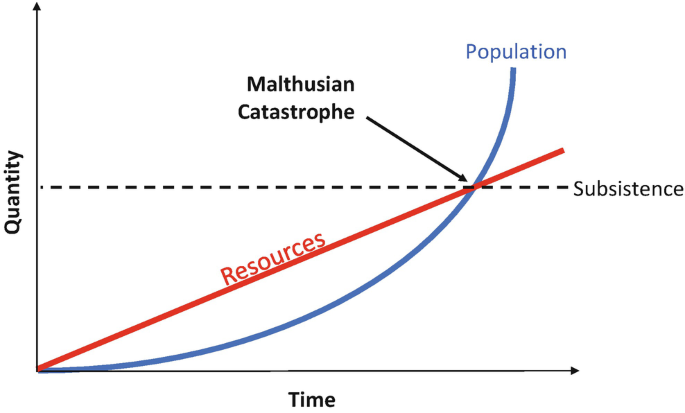
Malthusian curve: Population grows exponentially and food resources linearly occuring crisis (©https://track2training.com/2025/10/13/contribution-of-thomas-robert-malthus/)
Following this theory, one of the main questions of the project was how changes in mortality rates, dietary habits, migration, and the incidence of disease can be identified in economic systems that are subject to significant demographic fluctuations. The program of the workshop featured presentations on bioarchaeological, demographic, and lifestyle research based on settlement and burial data.
In her keynote lecture entitled Bronze Age Life Stories in Hungary between 2500 and 1500 Viktória Kiss presented new bioarchaeological case studies of the Early and Middle Bronze Age research in Hungary.
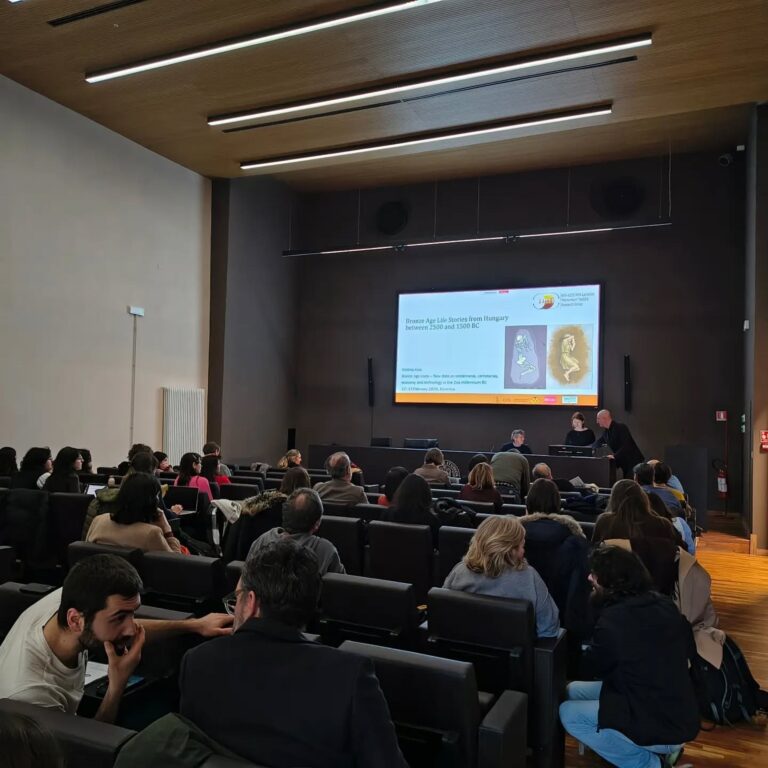
Viktória Kiss’s presentation on Bronze Age bioarchaeological case studies (photo: ©Megic Lab)
On the second day of the workshop the closing conference of the CAST (Copper Accumulation, Supply, and Technology among Italian prehistoric societies; PI: Maurizio Cattani) project was held. The latest research findings from the Po Valley region on copper mining, metalworking of the period, and the social role of metal objects was shown in the presentations. The time period spanning between the end of the 3rd and the end of the 2nd millennium BC was characterised by an increasing demand for copper and copper alloy objects determining the establishment of capillary smelting and metal workshops, as well as long distance contacts and exchange routes. The economy of metal production in the Bronze Age is particularly significant since the modern concepts of circular economy, recycling and sustainability can be traced back to this period. In fact, copper and its alloys are the first completely recyclable material used in prehistory, allowing its constant reuse and re-adaptation. This important economic revolution also caused a considerable impact on the environment. The presentations showed new results from the research conducted using archaeometric analyses, 3D reconstructions, and experimental archaeological methods.
Viktória Kiss presented a keynote lecture, entitled Dynamics and Networks of Early Metallurgy in the Carpathian Basin, on the research findings of early metallurgy in the Carpathian Basin.
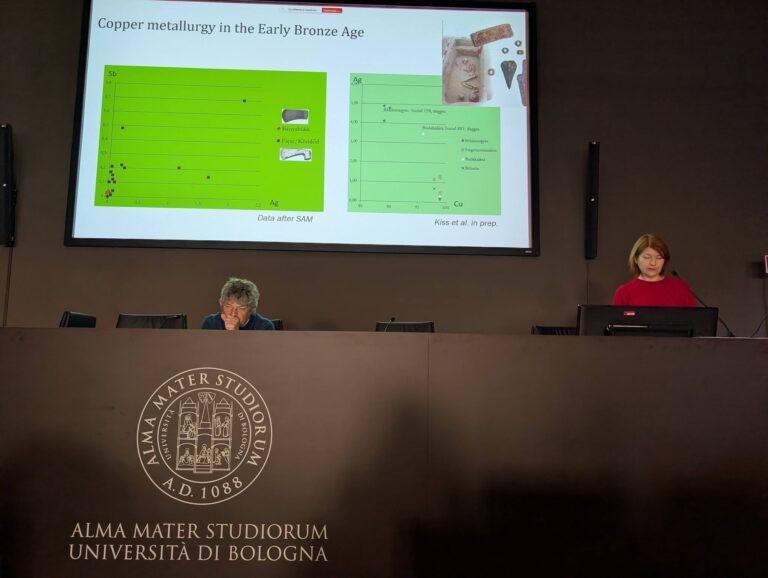
Viktória Kiss’s presentation concerning early metallurgy in the Carpathian Basin (photo: ©Barry Molloy)
We are very grateful to the Universities of Bologna and Ravenna, Claudio Cavazzuti and Maria De Falco for their kind hospitality!