Child Space 2025 — International Conference in Budapest on the Bioarchaeological and Biosocial Research of Children
From 4 to 6 June 2025, Budapest will host the international conference Child Space 2025 — Narratives and New Perspectives on the Bioarchaeology of Children and Their Biosocial Complexity / Gyerekterek 2025 — Új narratívák és nézőpontok a gyerekek biorégészeti és bioszociális kutatásában. The meeting places its focus on the smallest social unit—the family—and its central figure: the child. The aim of the conference is to foster dialogue between the diverse research directions that explore past childhood across disciplinary boundaries.
The conference logo (by Borbála Sarolta Szekeres)
Today, one of the most popular topics of conversation in our society is the child. Countless specialist books and online forums discuss what we can do to support the balanced physical and emotional development of children, and—armed with modern knowledge—we can also reassess our own childhoods, thereby deepening our self-understanding. Even within a single lifetime, we can observe generational differences shaped by shifting social and environmental conditions. We are increasingly aware of the complex processes that influence the roles we fulfil in adult life, as well as our ability to adapt to modern society, our surroundings, and the challenges they present.
But how did we arrive at today’s understanding? And without the knowledge we now possess, what was childhood like in the distant past?
Childhood can be explored from many angles – like examining a multifaceted gem – in space and time. The primary aim of the Child Space / Gyerekterek scientific conference is to map out this rich and multifaceted picture through the lenses of historical and biological sciences. It has become clear that children were not invisible in the past either—they shaped and defined their own spaces, just as they do today. Their physical remains bear witness to the environmental and social factors that influenced their growth and prevented them from reaching adulthood. Moreover, understanding past parental attitudes and the familial or communal bonds of children is essential for comprehending and shaping the relational networks of the modern era.
Research of past childhood in our region is still in its infancy. Accordingly, another key aim of the conference is to foster the development of new, collaborative research directions. During the public lectures, leading scholars in the archaeology of childhood will guide us through the field. The accompanying roundtable discussion —featuring experts in psychology, pedagogy, and cultural anthropology, — seeks to create a space in which past and contemporary children can “meet,” establishing a new perspective not only on childhood but on human existence.
The topics addressed include questions of social roles and functions, such as family and community relationships, child-rearing practices, the life cycle and its disruptions. From a biological standpoint, these topics explore how social and environmental changes impact the most sensitive stages of human life.
In connection with the conference, we are announcing a children’s drawing competition titled “Life in the Past — Through the Eyes of a Child,” open to participants from kindergarten age up to 15 years old. Detailed information about the competition can be found here.
On the opening day of the conference, the submitted drawings will be exhibited. The accompanying roundtable, featuring experts in psychology, pedagogy, and cultural anthropology, will explore children’s histories across the spectrum of past and future.
During the conference’s public lectures, leading scholars in the archaeology of childhood will guide us through the field. The presentations will be streamed live, and the recordings will also be available on the HUN-REN RCH YouTube channel.
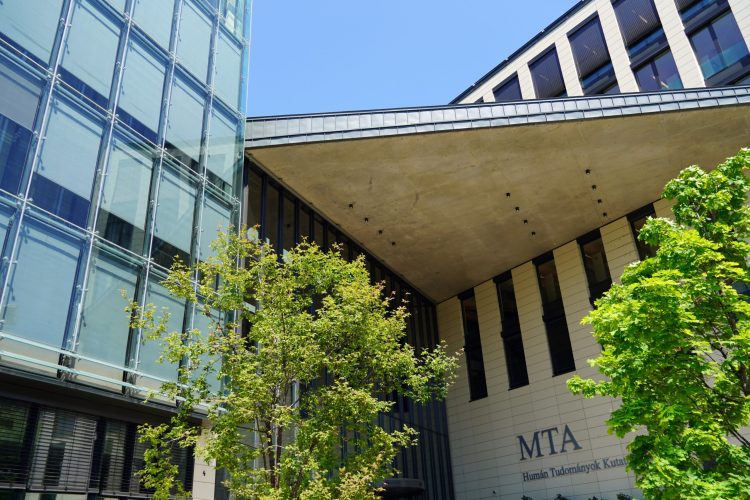
The conference venue: the Research Centre for the Humanities (Budapest, Tóth Kálmán Street 4)
The international scientific conference, held in Hungary, is organized in collaboration with the HUN-REN RCH Institute of Archaeology; HUN-REN RCH Institute of Archeogenomics; ELTE BTK Institute of Archaeological Sciences; ELTE Faculty of Science, the Institute of Biology, Department of Biological Anthropology.
The conference organizers and scientific advisors are Orsolya Mateovics-László, Gabriella Kulcsár, along with Alexandra Anders, Szilvia Fábián, Viktória Kiss, Eszter Melis, Zsófia Rácz, Tamás Szeniczey, and Anna Szécsényi-Nagy.
The conference is supported by the NKFIH Mecenatúra MEC_SZ_24 149350 project, the MTA–RCH Momentum Bioarchaeology Research Group, and our research team.

Logo of the supporting organization, NRDIO
Further information can be found on the conference website, available in both Hungarian and English: https://www.childspacebudapest2025.com
and on the event’s Facebook page under the “Discussions” tab.
Registration deadline: 25 April 2025
https://www.childspacebudapest2025.com/registration
Poster submission deadline: 11 April 2025
https://www.childspacebudapest2025.com/posters/c14a6e47-8f27-413e-8c11-7fe90a0d1d98