One of the most significant scientific and social challenges of the 21st century is the storage, structuring, modelling, and publication of large, complex research datasets, commonly referred to as “big data”. Archaeological research is no exception to this rule. Archaeology is likewise challenged by the rapid expansion of data over the past two decades, driven by far closer collaboration with the life and natural sciences. This development is often described as the ‘Third Science Revolution’ in archaeology, which has gained considerable currency in international research circles. This reflects the remarkable advances in bioarchaeology, which—after the discipline’s emergence in the late 19th century and the so-called radiocarbon revolution in the second half of the 20th century—have yielded another significant breakthrough in research.
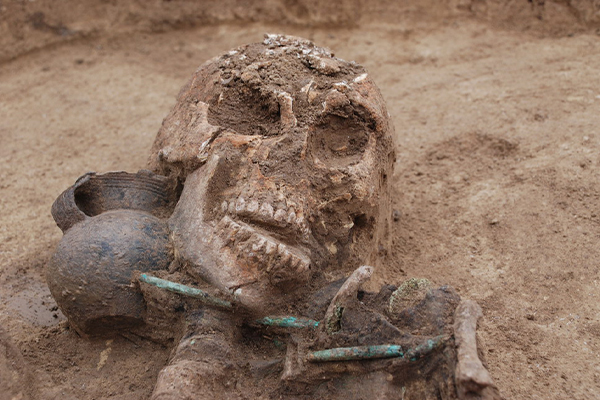
This project therefore focuses on the first thousand years of the Bronze Age in Hungary (2500–1500 BC), a formative period for Europe’s later demographic and cultural development, since the intermingling of the three principal components present today is rooted in this period. The legacy of the Mesolithic hunter-gatherers, the Neolithic farmers with Anatolian roots and the steppe shepherds is evident, although to varying degrees, depending on the region. In this context, this period is regarded as the point at which the process of “Indo-Europeanization” of Eurasia began. Furthermore, the Bronze Age represents a significant step in the development of political institutions, situated between the early stages of egalitarian communities and the formation of the earliest states. This period saw the emergence of chiefdom societies and the institutionalisation of social inequality. The project represents the organic continuation of previous multidisciplinary basic research, which was carried out with the support of the NRDI Office (K108597, 2014–2018) and the MTA–BTK Lendület “Momentum” Programme of the Hungarian Academy of Sciences (LP 2015-3, 2015–2023). The study of the people living in the Carpathian Basin, contemporaries of the builders of the great pyramids in Egypt and of the Greek heroes buried in the Mycenaean shaft graves, has already yielded a number of bioarchaeological datasets generated through a combination of anthropological, isotope geochemical, and archaeogenetic techniques. Archaeometric data were also produced in collaboration with material scientists. Consequently, the project entails the systematic organisation, documentation, analysis and dissemination of the data in multi-level digital databases. In addition, the dataset will be expanded with new insights on economic resources, a previously under-researched topic, and integrated into the previous settlement network research.