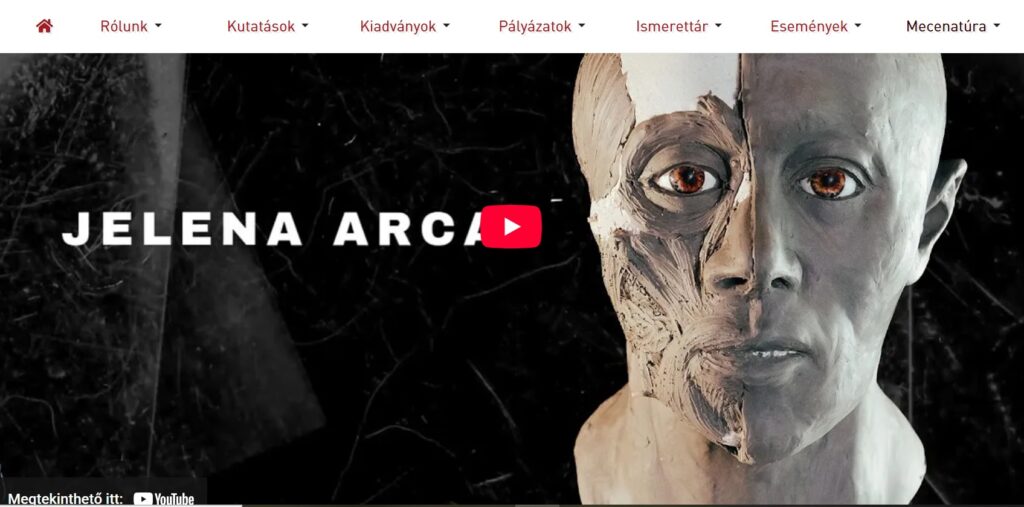
The film Jelena’s Faces at the 45th Hungarian Film Week
One of the case studies of our research group and the process of creating a Bronze Age facial reconstruction (Gerber et al. 2023; Kiss et al. 2024; Kustár et al. 2024a, 2024b) was presented in the popular scientific film completed in 2025 as part of the NKFIH Mecenatúra project entitled His Profession: Researcher – Knowledge of Generations, which was introduced to the public on November 25, 2025, at the Old Times Cinema event.
The film has been selected for the special professional program of the 45th Hungarian Film Week. The screening will take place on February 7, 2026, at 6:30 p.m. in the Latabár room of the Corvin Cinema.
The film presents the facial reconstruction of a woman found in one of the Early Bronze Age graves uncovered during excavations at the Balatonkeresztúr-Réti-dűlő site preceding the construction of the M7 motorway in 2003. The skull of a 35–45 year-old woman was exceptionally well-preserved in grave 13, and made it possible to reconstruct the face using sculptural-anatomical techniques. Radiocarbon testing of the bones confirmed that woman named Jelena by the researchers (based on the DNA analysis identified haplogroup J, and on the name days found in the calendar on the day of the excavation) was laid to rest between 2040 and 1890 BC. The metal jewelry, rare for that period, suggests that she may have had a higher social status within the community living in the excavated settlement.
During the facial reconstruction carried out by Ágnes Kustár, the idea of documenting the process on film arose, so Dániel Gerber recorded several hours of footage of the work. This joint, interdisciplinary work was remarkable in many ways for those involved in the research: it was Szilvia Fábián’s first independently led archaeological excavation, Dániel Gerber earned his PhD based on the results of his archaeogenetic research, while the work of the Momentum Research Group led by Viktória Kiss resulted in the first female facial reconstruction from the Bronze Age. The sad reality of the film is that Ágnes Kustár passed away shortly after the work was completed, so the film, created using archive pictures, also serves as a memorial to Ágnes. Following the presentation, the short film attracted considerable attention. This is demonstrated by the fact that after a few weeks, the ELTE HTK YouTube channel had recorded more than 64,500 views. The film is now also available with English subtitles.