Winter and Summer at Lake Fertő: Continuing Early and Middle Bronze Age Micro-Regional Research in the Sopron Area
In autumn 2023, the joint research project of the MTA–BTK Lendület ‘Momentum’ Mobility Research Group and the Sopron Museum was launched to investigate Early and Middle Bronze Age (2500–1500 BCE) settlement patterns around Lake Fertő. The rich cemeteries and hilltop settlements of this period constitute an important point of connection with the western regions of Central Europe, while also providing key evidence for social organisation and hierarchy. Further details on our research can be found in several earlier reports (see here, here and here).
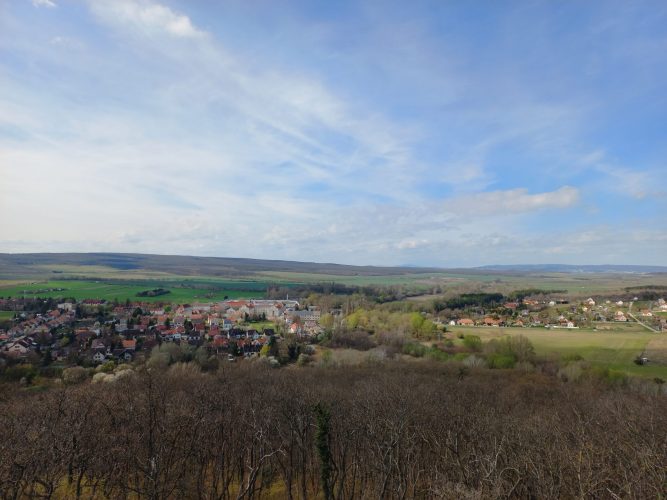
View from Fertőrákos – Kecskehegy (Photo: Eszter Melis).
The current phase of the project relies primarily on non-invasive methods. Features identified on LiDAR surveys of the area are verified in the field; sherds of pottery from different periods are collected systematically from ploughed fields and georeferenced using handheld GPS devices; the region is also examined with metal detectors; and on promising sites, magnetometry is employed to map subsurface archaeological structures.
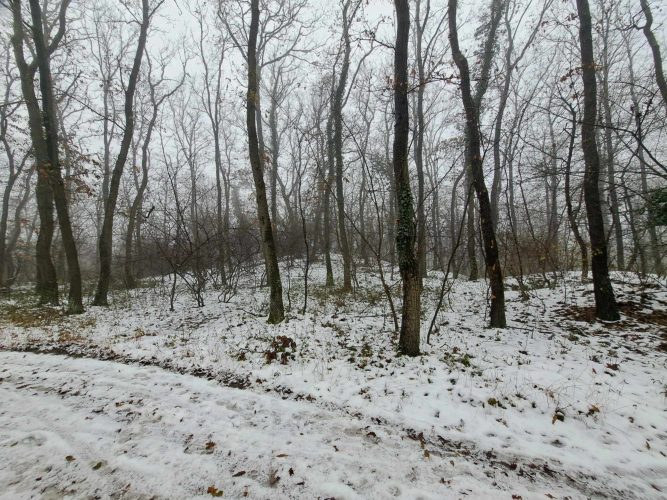
A mound in the snow (Photo: Attila Mrenka).
The winter season proved favourable for metal-detecting in the wooded areas. Under the guidance of Attila Mrenka, volunteers from the Sopron Museum ventured into the dense undergrowth of the hilltop settlement at Fertőrákos. Their efforts were rewarded with the discovery of a Middle Bronze Age flanged bronze axe (found by Attila Kocsis) in the cut of the tourist path beneath the inner rampart of the fortified settlement. Endre Pálovics also identified a large barrow located near the fortified site.
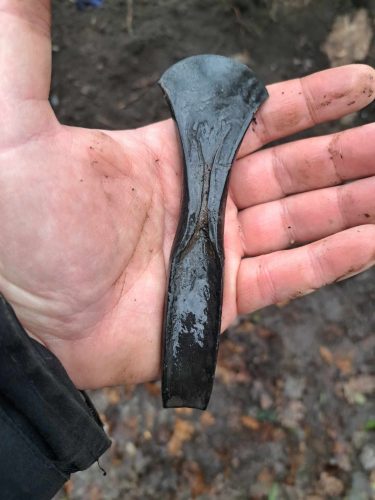
Bronze axe (Photo: Attila Mrenka)
After the harvest, recently cut stubble fields became accessible, offering particularly good conditions for geophysical survey. Using magnetometry, we examined more than ten hectares of agricultural land surrounding barrow fields identified on the LiDAR imagery. Variations in soil magnetism revealed traces of several additional barrows as well as other archaeological features.
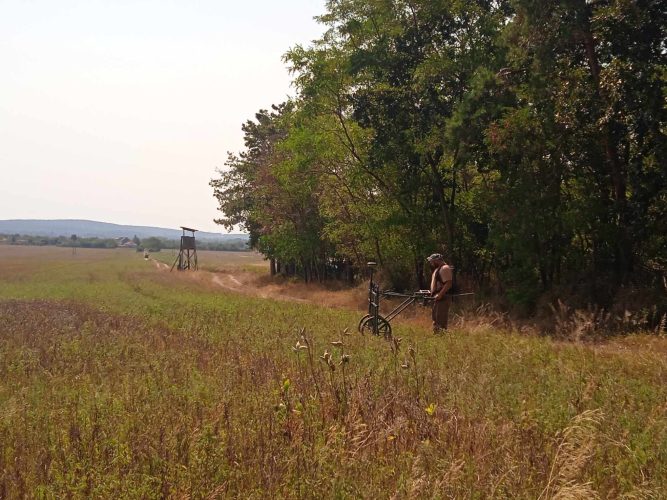
Magnetometric survey (Photo: Viktória Kiss)
Where vegetation permitted, we continued systematic, transect-based field survey with handheld GPS units—visibility was particularly good on disc-harrowed stubble. On the hills rising along the edge of the Fertő Basin, we collected substantial quantities of archaeological material from various periods, including the Bronze Age, all while enjoying the sweeping views over Lake Fertő.
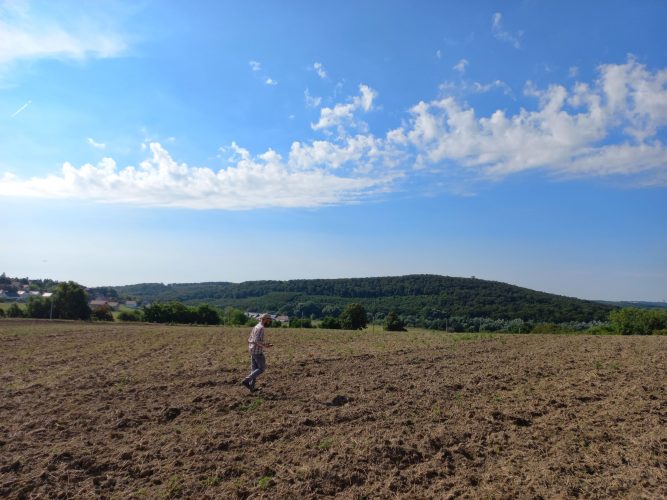
Survey (Photo: Eszter Melis)
The fieldwork team included: Csaba Bakó, Attila Kocsis, Tibor Fábián-Gyekiczky, Zoltán Tóth, Csaba Deák and Endre Pálovics, volunteers of the Ikva Heritage Research Association; Attila Mrenka, Chief Archaeologist of the Sopron Museum; Krisztina Balassa, archaeological technician at the Sopron Museum; Ákos Ekrik, Kristóf Fülöp, Viktória Kiss, Eszter Melis and Nóra Szabó of the HUN-REN Research Centre for the Humanities, Institute of Archaeology; the volunteer Csaba Kálmán Kiss; and archaeology students Nikoletta Dienes and Tamás Tóth. We extend our sincere thanks to all for their work.
Eszter Melis