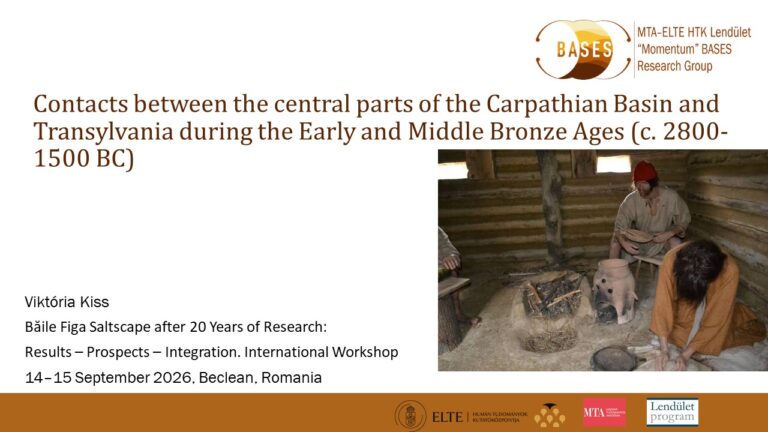
A presentation on research into the connections between prehistoric salt extraction in Romania by Viktória Kiss
The National Museum of the Eastern Carpathians (Muzeul Național al Carpaților Răsăriteni) in Sfântu Gheorghe organised an international workshop on 14–15 September 2026. The aim of the conference was to mark the 20th anniversary of the excavation of the prehistoric salt extraction site at the salt spring near Băile Figa in Romania. The workshop, entitled ‘The Băile Figa Saltscape after 20 Years of Research: Results – Prospects – Integration’, featured 16 presentations summarising research into salt springs discovered in the wider Carpathian Basin and the barter trade sustained by them.
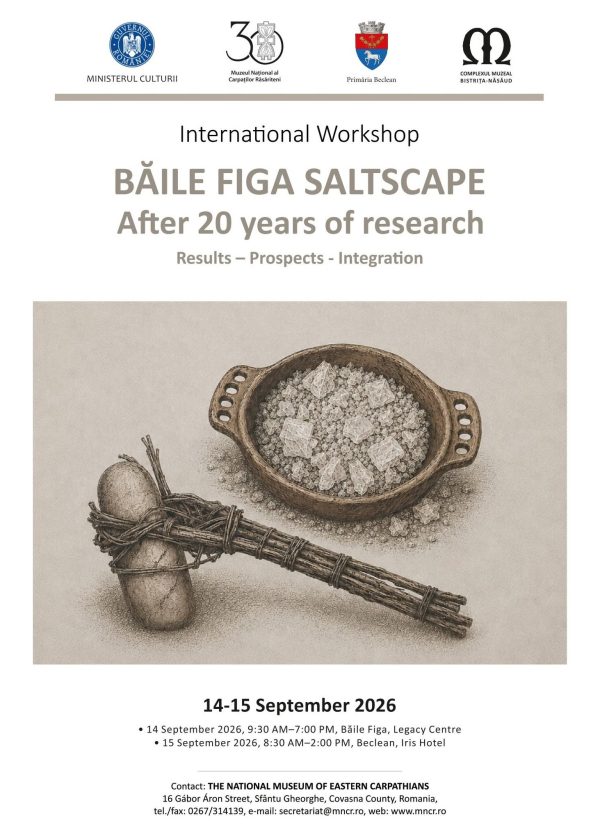
Several presentations outlined the archaeological research carried out over the past two decades at the Băile Figa site and at other salt springs in the Eastern Carpathian Basin. Talks were given on studies into prehistoric salt extraction in Europe, the systematic research into the salt region of Lesser Poland and the experimental archaeological project carried out there, finds linked to the Bronze Age, Iron Age and Medieval salt trade in the Eastern Carpathian region, and written and archaeological evidence relating to the salt route used in Dacia during the Roman-era. Viktória Kiss presented links between communities of the central part of the Carpathian Basin (today Hungary) and the groups engaged in the extraction of salt from springs and rock salt mines in the Eastern Carpathians, Lesser Poland and Central Europe during the Early and Middle Bronze Ages, as well as new data on transport and trade in these regions. The organisers plan to publish the presented papers in the proceedings of the workshop.