As was also mentioned in the welcoming speeches, the idea for the conference was first conceived in 2024. Initially envisioned as a one-day workshop, the event gradually evolved through the development of the concept and in response to significant national and international interest, ultimately becoming a three-day international conference.
The focus of the event was the changes occurred in the Carpathian Basin and the surrounding Danube regions in the mid-second millennium BC. This 300-year period of the Tumulus Culture (c. 1600/1500–1300/1200 BC) reflects a changing world, as expressed in the conference title, with transformations affecting nearly every aspect of former communities’ lives. Climatic conditions influencing everyday life changed, the relationship between humans and the landscape was transformed, and with it the function and network of settlements, the attitudes towards life and death, as well as the local and regional connections expressed through material culture, also underwent significant change.
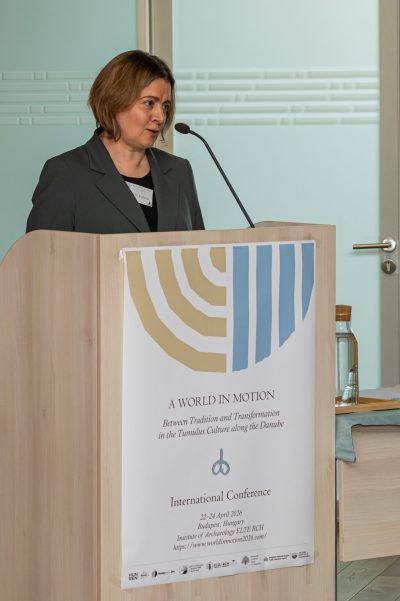
At the opening of the conference, welcoming remarks were delivered by several speakers, including Gabriella Kulcsár, Director of the Institute of Archaeology ELTE RCH (photo: László György)
A few weeks after the event, it can be stated that the conference successfully fulfilled its objectives: with a total of 31 presentations and 8 posters delivered by researchers and research groups from 11 countries, it provided a much-needed synthesisof the diverse and changing world of the Tumulus period. The presentations not only summarized previous research results, but the three-day programme also outlined important future methodological and collaborative directions through the presentation of current research trends and questions. Furthermore, the event also provided an excellent opportunity for early-career researchers, including PhD students and postdoctoral researchers, to present their results and methods alongside experienced specialists.
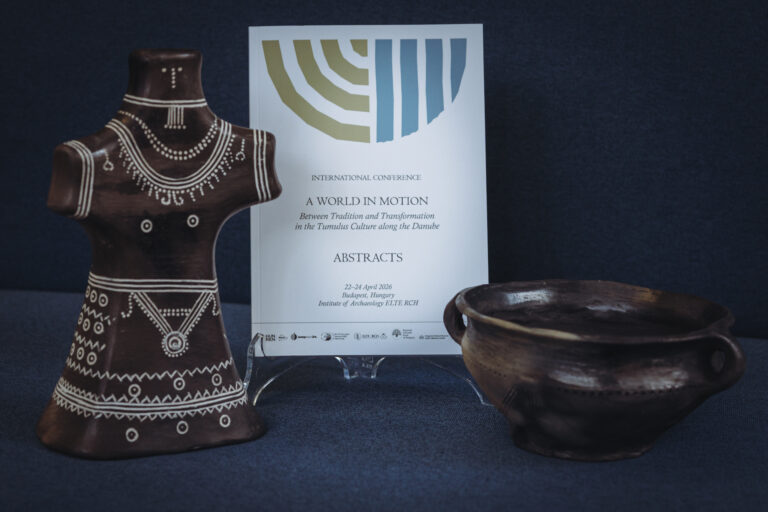
The conference abstract volume, also available online, in the embrace of the Middle Bronze Age (photo: László György)
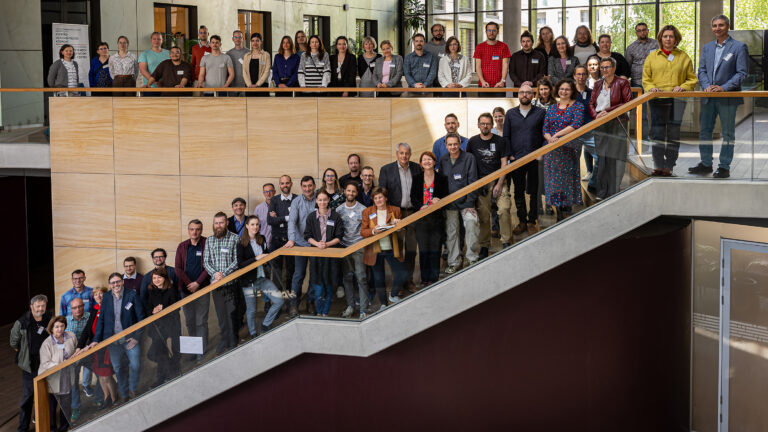
Participants of the conference (photo: László György)
The significance of the conference is well illustrated by the fact that, in the closing quiz game, participating speakers and attendees unanimously voted in favour of the future continuation of the conference and supported the publication of a comprehensive edited volume.
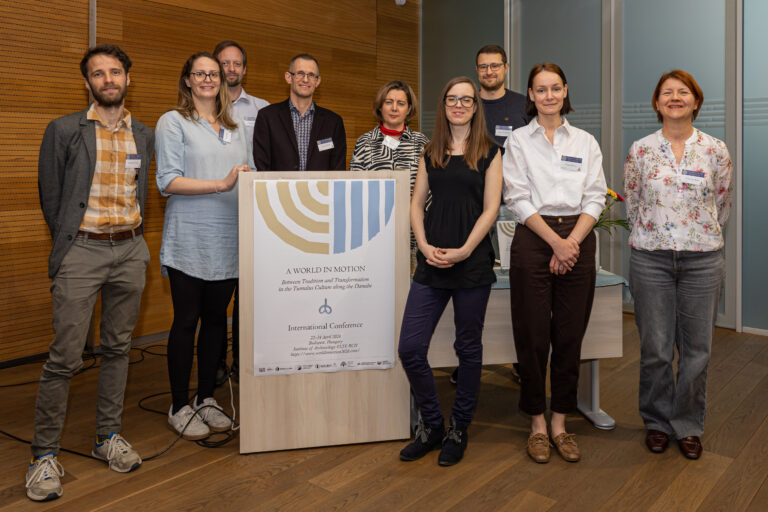
The members of the Tumulus Research Group and organisers of the conference were Kristóf Fülöp(1), Polett Kósa(2), Péter Mali(3), Ákos Mengyán(4), Gábor Sánta(1), Nóra Szabó(1), Anna Szigeti(5), as well as Viktória Kiss(1) and Gabriella Kulcsár(1).
1: Institute of Archaeology ELTE RCH / MTA–ELTE HTK Lendület “Momentum” BASES Research Group 2: HNM PCC Hungarian National Museum, National Institute of Archaeology (from 1 April 2026: Department of Archaeology) 3: Government offices of Jász-Nagykun-Szolnok County, Bureau of Construction and Heritage Protection 4: HNM PCC Hungarian National Museum, National Institute of Archaeology (from 1 April 2026: Archaeometry Laboratory) / Institute of Exploration Geosciences, University of Miskolc 5: HUN-REN ATOMKI / Isotoptech Ltd. / Archaeological Department, University of Szeged
The team that envisioned and organised the conference, the “Tumulus Research Group” (photo: László György)
The full conference programme, the printed abstract volume published by Archaeolingua, the posters, and photographs from the event are available on the conference’s website: https://www.worldinmotion2026.com/