Making the invisible visible? On Bronze Age reconstructions in the summer issue of Hungarian Archaeology
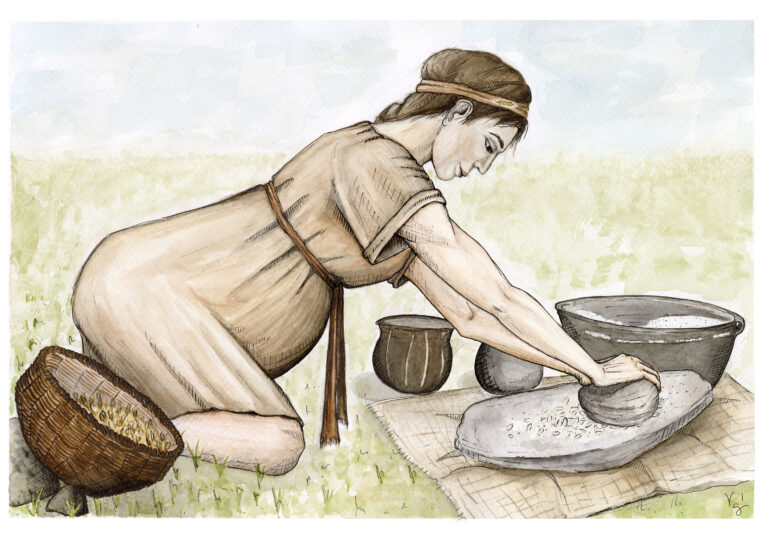
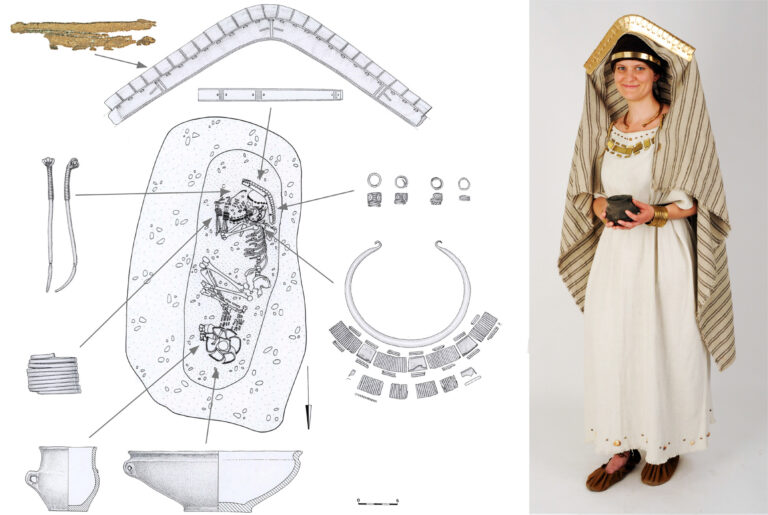
Even in our modern world, characterised by the extensive use of plastics, we are surrounded by numerous everyday objects made of organic materials, including garments made from plant and animal materials, as well as furniture, furnishings, and tools carved from wood or woven from wicker. During the Bronze Age, alongside tools made of copper or bronze and stone, objects and items of clothing made from organic materials were of even greater significance. However, learning about them is difficult because, without the preservative effects of special conditions, they easily decompose in the soil in the climatic conditions of temperate Europe. Owing to favourable circumstances, we know of examples of wooden tool handles, coffins, and boats, as well as textile fragments of varying sizes and building components preserved by water, ice, acidic environments, or metal salts. Even with this evidence available, numerous aspects of prehistoric material culture—and, within that, Bronze Age material culture—have become invisible today, and we can draw conclusions about them only on the basis of indirect evidence. Therefore, creating authentic archaeological reconstructions poses a serious challenge for researchers. In the book Bronze Age Life Stories in Hungary (3rd–2nd millennia BC), published in the Hereditas Archaeologica Hungariae series, a key focus was to present these stories not through bones and graves, but by placing people in settings that reflect everyday life. Accordingly, the women and men who lived in the first half of the Bronze Age in the Carpathian Basin (dating from 2600/2500 to 1500/1400 BC) were depicted wearing clothing and engaged in activities appropriate to the period (Kiss 2025). This study examines the possibilities and difficulties of presenting Early and Middle Bronze Age attire and presumed activities (Kiss–Varga 2026).
From the editors’ foreword:
„Hungarian Archaeology Online’s 2026 summer issue offers a diverse range of academic articles covering various periods and different methodological approaches. The new issue also renews its emphasis on community archaeology programmes and the Forum section. However, a common thread links the published articles: alongside new research and findings, each also looks back at archaeology’s past. Although some articles draw on older archaeological investigations, others examine research history or study important artefacts long held and hidden in museum collections; new excavations and scientific analyses allow them to be seen and interpreted in a new light.
Viktória Kiss and her co-author, graphic designer Zsóka Varga, have chosen a subject that seems simple and straightforward, yet has many pitfalls. The topographical location of the sites, their environment, climatic conditions, excavation techniques, and, in particular, restoration and conservation techniques, as well as numerous other factors, all play a decisive role in visualising the everyday life, activities and attire of prehistoric people – in this case, the Bronze Age communities of the third and second millennia BC. This article highlights the most important sources: the visible (excavated material culture) and mostly invisible organic elements (primarily wood and textiles, as well as food remains). Examples of particular importance include the well-known South Tyrolean ‘Iceman’, Ötzi, and the woollen garments from coffin burials in Denmark. These make possible reconstructions that would otherwise have to rely on small fragments surviving only under exceptional circumstances. One of the article’s chief merits is its rich and wide-ranging bibliography on textiles, a field that has recently come to the forefront of archaeological research.”
References
Grömer, K. & Hofmann-de Keijzer, R.: Dull Hues Versus Colour and Glamour: Creative Textile Design in the 2nd Millennium BC in Central Europe. In: J. Sofaer (ed.): Considering Creativity, Knowledge and Practice in Bronze Age Europe. Oxford: Archaeopress 2018, 55–66. https://doi.org/10.2307/j.ctvndv8rw.9
Kiss, V.: Bronze Age Life Stories from Hungary (3rd–2nd millennia BC). Budapest, Archaeolingua Foundation 2025.
Kiss V.–Varga Zs.: Making the invisible visible – Reconstructions from the Bronze Age. Hungarian Archaeology 15/2 (2026) 1–12; https://doi.org/10.36338/ha.2026.2.2